

Hosting Season Is Here: Does Your Home Still Fit Your Life?
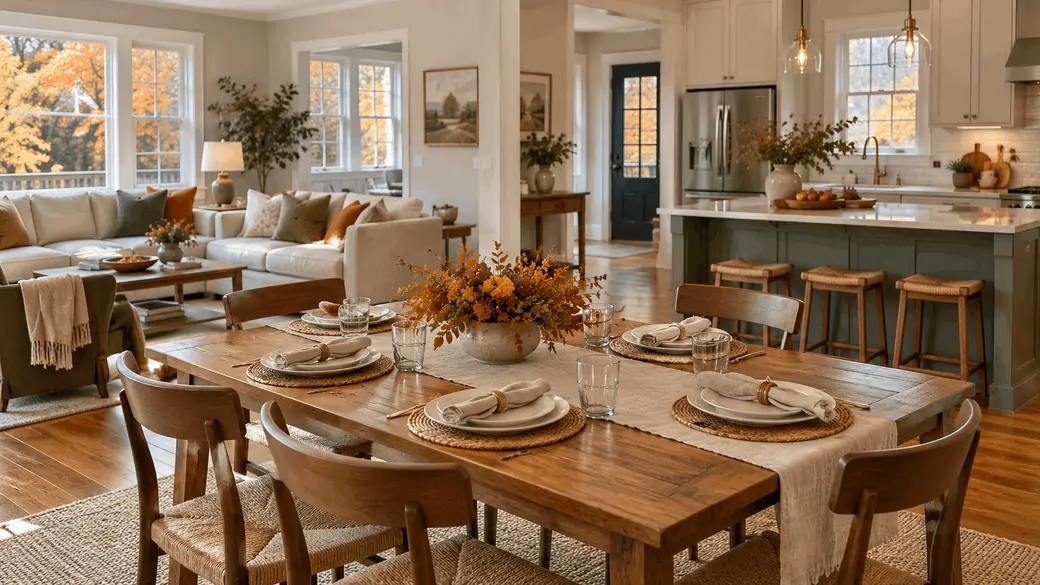
The invitation sounded simple: “Come over. We'll have plenty of room.”
Then the extra chairs appeared. Someone needed an outlet. The kitchen became a spectator sport. And you discovered that the perfect spot for the serving table was also the only route to the bathroom.
Welcome to hosting season—the unofficial annual performance review for your floor plan.
Whether you live in Raleigh, Sanford, Johnston County, or another Central North Carolina community, having people over can reveal things you barely notice on an ordinary Tuesday. Sometimes the answer is a furniture shuffle. Sometimes it's a thoughtful home improvement. And sometimes you realize your home worked beautifully for a version of your life that has changed.
Before you declare that you need a bigger house, take a closer look at what you actually need.
Start with the pinch point, not the square footage
“We need more space” is a feeling. “Two people can't work in the kitchen without blocking the refrigerator” is useful information.
Think about the last time you hosted. Where did people gather? Where did they get stuck? What did you move, borrow, or hide to make the evening work?
A large room with awkward furniture placement may feel less usable than a smaller room with a clear path through it. A separate dining room may be ideal for one household and underused by another. An open layout can make conversation easier, but you may prefer a little separation between cooking and gathering.
Write down your three biggest frustrations. Be specific: limited seating, nowhere for coats, a noisy gathering area, or a guest sleeping arrangement that takes over your everyday space.
That list is more helpful than simply adding another bedroom to your search filters.
Try the low-commitment fixes first
Before you call a contractor—or start packing—experiment with what you already have.
Move the drinks away from the main food-preparation area. Give coats and bags a designated spot. Rearrange furniture so people can get to seating without squeezing past a chair. Try a smaller serving setup instead of putting everything on the dining table.
An expandable table or a different storage arrangement may help, but test the layout before buying more furniture. Measure with chairs pulled out, cabinet doors open, and people actually moving around.
Keep entrances and exits clear. A clever layout still needs to work safely and comfortably.
The goal isn't to turn your house into an event venue. It's to make an ordinary gathering feel a little easier.
Separate a seasonal inconvenience from a daily mismatch
A house that feels crowded during one big dinner isn't necessarily the wrong house.
Ask yourself: Does this problem show up twice a year, or every afternoon?
If the dining area is tight only when twelve people visit, a temporary arrangement may be enough. If you move work materials off the table every evening, struggle with everyday storage, or regularly need a more workable sleeping setup, the issue may deserve a longer-term plan.
Also consider how you want to live over the next few years. Would fewer stairs make daily life easier? Do you want a quiet room with a door? Would a smaller property give you less to maintain? Does a larger yard sound appealing—or like another weekend assignment?
A better fit can mean more room, less room, or simply a different arrangement of rooms.
If you improve, solve a clear problem
A focused project starts with a clear purpose: better storage, improved lighting, a more useful room, or a layout that supports how you live.
Before committing to major work, get professional advice about feasibility, a written scope, and realistic estimates. Confirm applicable permits and HOA approvals. A wall that looks inconvenient isn't automatically a wall you can remove.
Think through the disruption, too. Where will you cook, work, or store things while the project is underway? What happens if the schedule changes?
Most importantly, distinguish personal enjoyment from resale expectations. An improvement may be worthwhile because you'll use it every day; that doesn't establish how much a future buyer will pay for it. If a move is likely, talk through the project with your agent before spending around an assumed resale benefit.
If you explore a move, shop for the way you live
Listing photos can show a beautiful dining table. They can't tell you whether your own chairs will fit around it.
Bring measurements and a short list of priorities when touring homes. Look at the relationship between rooms, not just their labels.
Could guests reach a bathroom without passing through a private bedroom? Is there practical storage near the entrance? Where would a serving table go? Does the outdoor area support how you like to gather? Are the routes between spaces comfortable for the people who will use them?
A room labeled “flex space” only helps if you have a realistic use for it. Imagine your own belongings there, including the less photogenic ones.
Whether you're considering another Raleigh neighborhood, a home in Sanford, or a different setup in Johnston County, compare actual properties against your priorities. A different location doesn't automatically solve a layout problem.
Make the comparison bigger than a monthly payment
If you're weighing staying against moving, put the two paths on paper.
For staying, consider the proposed work, professional fees, approvals, disruption, and ongoing upkeep. For moving, consider transaction expenses, moving costs, the new home's operating costs, and any work you'd want to do after arrival. Use current property-specific estimates and financing information rather than assumptions.
Then add the things that don't fit neatly into a spreadsheet: your attachment to the neighborhood, the time a project would require, and how much the existing problem affects your day.
You don't have to decide during the holiday rush. A useful first step may be gathering information now and choosing a timeline later.
Try this before the next invitation goes out
Take ten minutes and finish these three sentences:
- What I love about this home is…
- What regularly makes life harder is…
- The one change that would help most is…
Keep the answers practical. “A place to put six coats” and “a quieter room for overnight guests” are both valid. So is “less house to look after.”
Your home doesn't need to pass a magazine photo shoot. It needs to support the life happening inside it.
And if everyone ends up in the kitchen anyway? At least now you'll know whether that's a favorite tradition or a traffic problem worth solving.
Wondering whether to rearrange, improve, or make a move?
I'm happy to help you think through your options without rushing the decision. Whether you're staying put or exploring your next chapter in Raleigh, Sanford, Johnston County, or a nearby community, let's start with what would make home work better for you.
Contact Christopher Weber with HomeSmart Expert Realty at 919-344-9366, email broker@chrisleadsnc.com, or visit ChrisLeadsNC.com.
Categories
Recent Posts








“My job is to ensure you are setup for success from start to finish! I'm here to help make magic happen every step of the way......Together we will manifest GREATNESS! ”